Showing posts with label Television. Show all posts

Friday, December 30, 2016

Review: TBS Binge-A-Thon

I've been sick as a dog this week, which means I've been camped out in front of the TV in pure couch potato mode. Luckily, TBS has been putting on a "binge-a-thon" this week (between Christmas and New Year's), in which they show all their original programming from first to last episode throughout the week (apparently all of their shows are in their first seasons). I'm happy to say that this was not a wasted effort. Here are my thoughts on the shows, from worst to best:

Angie Tribeca was created by Steve Carell and his wife Nancy, and it's a comedy that follows an LAPD homicide detective and her questionably competent precinct.  Apparently the Carrels are big fans of Jim Abrahams and the Zucker Brothers, because it's exactly the kind of humor you would expect from the makers of Airplane, Top Secret or Hot Shots!  Unfortunately, the Zucker-Abrahams-Zucker trifecta did it better with their Naked Gun franchise, and even more so with the original Police Squad. Angie Tribeca is full of corny jokes and manages to be amusing at times (a statistical certainty when they toss off as many gags as they do), but it lacks the deadpan performances that made Police Squad kick, and as much as I like Rashida Jones, she ain't no Leslie Neilsen.

It's been six years since Lost ended its enigmatic run, but here comes Wrecked with the parody no one was really looking for. I went in expecting the humor to be as stale as the premise, but it actually turned out to be pretty fun. It's very silly, but there are several good performances that keep it together. If you remember Lost fondly, or if you long for a more contemporary Gilligan's Island, this is probably a worthwhile program to check out.

The end of John Stewart's run on The Daily Show mostly led to a bunch of new satirical news programs. However, former correspondents Samantha Bee (who also now anchors her own comedy news program on TBS) and Jason Jones decided to break the mold and create the delightfully surreal sit-com, The Detour. Jason Jones stars with Natalie Zea, Liam Carroll and Ashley Gerasimovich, as a family on a road-trip to Florida. Along the way, they keep getting sidetracked in ridiculous ways. The episodes are a little uneven, but the performances are top notch-- they couldn't have cast this show any better. I found myself thoroughly charmed by the family, and I'm eager to see what happens in the second season.

Another former Daily Show correspondent, Wyatt Cenac, leads the large ensemble cast of People of Earth, a show about a local support group for alien abductees, while also following the machinations of the aliens working behind the scenes. I've found this show to be consistently the funniest of the bunch, with lots of great characterizations and inventive scenarios. I thoroughly recommend it for fans of both comedy and sci-fi.


My favorite show of the binge-a-thon was Search Party. It's a biting satire of self-involved 20-something hipster culture, while still managing to be an exceptional product of that aesthetic. Alia Shawkat (aka Maeby from Arrested Development) stars as a girl having her quarter-life crisis who becomes obsessed with the disappearance of an old dorm mate she barely knew in college. The mystery is twisty and engaging, and the sophisticated humor cuts deeply. The show has been picked up for a second season, but this 10-episode run is a complete and satisfying story all on its own. Some will be turned off by the four main characters-- they're all unlikeable in their own ways-- but if you appreciate finely crafted serialized television, you owe it to yourself to check this out.

Wednesday, December 21, 2016

What's Wrong With Cinematic Comedy?


So, I went to see Office Christmas Party. I really like all the actors involved, and the basic premise sounded cool, but it ended up being just another mildly amusing film comedy. It had some good energy at times, but it never really got as bawdy or as outrageous as would've been nice. It was fun without really being funny.

But it got me thinking-- what's wrong with big screen comedies, anyway? On television you have sitcoms that go through season long arcs being absolutely hilarious, while 90 minute movies can't seem to make it through the third act without some hokey car chase or criminal hijinks that turn the film into a thriller for some reason. You'd think all those great TV joke writers would have screenplays lying around, but the good stuff doesn't seem to be making it to the silver screen.

I don't mean to say there aren't good film comedies out there, but they're often good for reasons other than their humor. This is especially true of indie comedies, which are really more light-hearted dramas. I loved Hello, My Name Is Doris and liked and respected Don't Think Twice, but I don't recall guffawing. I guess most animated films are technically comedies, and many of them are excellent, but more for their whimsical storytelling than for how funny they are. And, of course, when you do get a "good" comedy, it's often because they throw so many jokes at you that at least some have to hit, if only because it's a statistical certainty (this is the situation with most Will Ferrell films).

What bothers me is that we're actually going through a comedy renaissance right now. LouieBoJack Horseman, Broad City, Rick and Morty, People of Earth, You're the Worst-- all of these sitcoms are funnier than any film comedy I can think of from the last few years. We also have a host of podcasts, talk shows and sketch comedy programs floating around that are consistently laugh-out-loud funny. Why is the movie industry lagging behind?


I'm open to being convinced I'm wrong on this. If you know of any gut-bustingly funny film comedies from the last five years, please post them in the comments section.

Tuesday, December 2, 2014

Great Songs from TV Ads

It used to be that serious musicians would try to avoid doing television commercials, but that's changed in the last 15 years.  Advertisers found that using obscure songs in their commercials was cheaper and aided them in their attempts at niche marketing.  At the same time, musicians who couldn't otherwise get radio play found TV ads to be a great way to get wide exposure.  I remember discovering one of my very favorite bands (The Walkmen) in this TV ad from the early 2000's:


Since then, radio stations have continued to get stingier with their playlists, and though YouTube, Spotify and Pandora have expanded indie musicians' opportunities to get exposure, television ads are one of the few avenues that promises both exposure and a substantial payout for an emerging artist.

So I'd like to highlight some of the good music I've heard recently on TV ads.  I think commercials can be an art form of their own, but they're often quite irritating, and a good song can ease the pain a little.  So on to our first ad...

***

I think this first ad is devastatingly effective-- it manages to tell you all about their product in a stylishly fun and visual way.  James Franco brings a lot of star power, but the song by The Bahamas really brings it home.

It's a great, slow-burn soul number with electronic flourishes, not to mention a Beatlesque guitar solo-- this one's a great find.  Check out the full length tune:


***

Now, my roommate is avid watcher of Project Runway, which is a fashion designer reality show.  As a bonding exercise, I'll often watch the show with her, even though it's not really my thing.  One thing about the show is that they play the same 3 goddamn commercials at every break.  Generally, I find this obnoxious, but there's one ad they frequently played last season that I got a kick out of-- specifically because I thought the song was pretty cool.  Here's the ad:


I don't think this is as great an ad as the one above with James Franco, just because I didn't realize this ad was for shoes (I think it's for shoes) until just now.  I really like the electronic sounds, which is weird because I'm not a huge fan of electronic music (I don't dislike it, I'm just picky).  The song is "Money Rain Down" by a band called Big Black Delta, and its official music video is actually pretty cool:


***

Unlike the others on this list, this jingle from a Perfect Bacon Bowl commercial isn't a standalone song-- it's only focus is on selling this artery-clogging monstrosity.  What's special about it is that the band performing the jingle do about as good of an impression of Queen as I can imagine.  Did Freddie Mercury rise from his grave to consummate his love of bacon?  I like to think he did.  Here's the ad:


Here's a fan-made video that plays the song over footage of the band Queen, just to make clear why we love the song...


***

So what are some songs you've discovered through television advertising?  Tell us in a comment below.

Friday, November 14, 2014

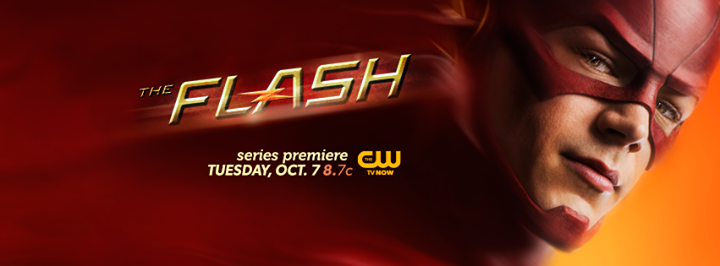
An Attack Of The Flash Facts, Part 2 (By Eric Farwell)

On Monday, Eric Farwell gave us Part 1 of a primer on The Flash and his enemies, and how they've evolved from comic book to television.  Today, Part 2 explores the origin stories of the various incarnations of The Flash and the casting choices made for the television series.  SPOILER ALERT: there may be some key plot points revealed in this article about the TV show.   --Dave


There’s no origin more boring than a random accident; thus every Flash used to have a boring origin. Jay Garrick was a college student who went oops in a science lab and breathed in some (wha?) hard water fumes, endowing him with super-speed. Barry Allen was working in his lab as a police scientist when a lightning bolt came out of nowhere and splashed him with chemicals. When Iris’s nephew, Wally West, was taking a tour of that very same police lab, another lightning bolt struck… and voila! Meet Kid Flash! The fastest yawn alive! Eventually, Wally would get the greatest costume in side-kick history, and a personality that meshed well with his team, the Teen Titans. He would also have a memorable twenty-five year run as the Flash, after his Uncle Barry died saving the universe in Crisis on Infinite Earths. But he would always have that lame-o origin, because it was an arbitrary repeat of the dull and random origin of the Silver Age Flash. Would the Flash ever shrug off the burden of his inauspicious beginnings?


                Yes. Oh, yes.

How do you fix an origin that’s inextricably tied-in with the character, especially after millions witnessed it in the 1990 Flash TV series starring John Wesley Shipp? The producers of the new TV series could have gone with one of the other Flashes, like Barry’s grandson from the future, Bart Allen. He was, perhaps, the cleverest fictional creation with super-speed, since he was an annoying adolescent with ADHD, called Impulse.

Choosing Barry for the TV show was the best bet, however, because he’s a Crime Scene Investigator. A super hero and a CSI? Talk about audience crossover! But two things had to be done with that origin. One: it had to be less random. Two: the most meaningful aspects of Barry’s story had to be culled from his decades in comics.

Even though Mark Waid, Johns, and others had done wonders with Wally West during Barry Allen’s decades as a dead man, fans never stopped clamoring for the return of their favorite Flash. In super hero comic books, it’s completely normal for characters to die and come back to life. It’s become so common that nobody took Batman’s death seriously several years ago. Barry’s demise in 1985 seemed like an easier death to undo than most, yet DC held firm that he wasn’t coming back. Perhaps it was because of Wally’s fatherhood and retirement, and Bart’s disastrous 13-issue turn as The Flashthat Barry’s return became possible. 

Barry Allen was the one character who had always been a nexus for DC Comics rebirth. He had renewed the company with the dawn of the Silver Age, and he had been the first to bridge the gap back into the Golden Age. In the early ‘60s, he accidentally went to a parallel Earth and met the older Flash, Jay Garrick. Thus were born Earths One and Two. More Earths were added to the DC canon; one for every faltering comic book company it bought, like Fawcett (Shazam) and Charlton (Blue Beetle). After decades of crossovers, then combining of universes into one, then blowing them apart again, the sorting has been done: there are now 52 parallel Earths. Now Barry Allen is the primary Flash again, on the primary world, Earth 0. Yet within this more manageable continuity, lives can still be shaken up on a grand scale.

Barry’s most evil enemy used time-travel to alter history, scarring him permanently with childhood trauma that is arguably worse for fans to contemplate than Bruce Wayne’s initiation as Batman. Those of us who grew up on a diet of Flash stories took some comfort in Barry’s contentment. To mess with that, Eobard Thawne, the Reverse Flash, was the perfect villain for Johns to use as he updated Barry’s origin. In his psychopathic need to inflict as much pain on Barry as possible, Thawne time-travelled into Barry’s childhood, killing his mother before his eyes, and framing his father for the crime. He even appeared at times to invisibly bully young Barry, once knocking him down a flight of stairs. What better way to get nerds and geeks to identify with our hero than to scar him during childhood, with a rosy picture of what should have been just lurking in the background? For Batman, it had always been his destiny to see his parents gunned down. For the Flash, his happier destiny had been ruthlessly stolen.

Cue the TV series. At the CW network, Green Arrow had been successfully adapted into Arrow. They were using origin flashbacks as skillfully as Lost, had a companionable team to support their hero, and now they were ready to use that formula in a spinoff. In bringing the Flash to the screen, they borrowed a plot device that had worked on Smallville (kryptonite) to explain why there were so many super powered enemies around… and improved upon it. By creating a crisis event at Central City’s Star Labs, they not only made FX super powers more plausible, they also managed to fix that last nagging part of the Flash’s origin: the lightning bolt. Now it was no longer random. Now it was part of a far-reaching event.

As if to compensate for the loss of Barry’s happier life, his support team is also a circle of friends, and he’s no longer the solitary hero he was in his erased timeline. But all is not well. The woman he loves, Iris (Candice Patton) is dating “Detective Pretty Boy,” Eddie Thawne (Rick Cosnett). Is this Professor Zoom, or one of his ancestors? Stealing Barry’s destined wife is just like something Zoom would do, but there’s something clueless about Eddie. Meanwhile Barry’s new mentor, Dr. Harrison Wells, is secretly ruthless in his protection of the Flash. He has ultra-tech that peers into future events, and he had foreknowledge of Barry’s origin.


The actor who plays him, Tom Cavanaugh, looks a lot like futuristic villain Abra Kadabra. Or maybe he’s another DC character like Rip Hunter, Time Master. Time will tell. Lots of clues to future events have already been sprinkled through the episodes for DC fans to find. There’s a busted-open cage at Star Labs with the name “Grodd” on it. Ronnie Raymond “died,” but we know he’s destined to become the hero Firestorm, just as achingly gorgeous Danielle Panabaker is destined to play the villain Killer Frost.


In any epic about the hero’s journey, one essential ingredient is heart. How appropriate it was for them to cast 1990’s Flash, John Wesley Shipp, as Barry’s imprisoned dad. Jesse L. Martin is formidable as the cop who served as Barry’s surrogate father, yet his sentimentality is close to the surface. Carlos Valdes is perfect as the brilliant and funny Cisco, a Johnny-on-the-spot with all the tech that Barry might need. And as the Flash, Grant Gustin brings all the brains and resourcefulness of Barry Allen, all the youthful brashness and appetite of Wally West, and all the stalwart righteousness of Jay Garrick. Back in the beginning, the Flash dressed like Mercury, and let us not forget what our modern super heroes are: the mythological gods of today.

Monday, November 10, 2014

An Attack of the Flash Facts, Part 1 (By Eric Farwell)

The new television show The Flash has been a huge success for the CW.  I asked my friend Eric Farwell to fill us in on everything we need to know about The Flash to enjoy the TV show.  In Part 1, Eric tells us about The Flash's publication history and his enemies.  Click here for Part 2.  --Dave


Of course, the greatest strength in the concept of The Flash is also its weakness: he moves impossibly fast. Huge thrills come from his ability to run a mile in seconds; to shower the crooks with dozens of punches; to evacuate a burning building in moments. But with no jeopardy, there’s no thrill. The guy who moves and sees and thinks at such a blur should be able to take down every opponent every time. His life would hardly ever be in danger. His enemies’ schemes would be instantly thwarted. In short (and it would be short) there would be no story. As a result, there have to be some absurdities added to the beyond-unlikely power of super speed. Back in the 1960s, the Flash was shown in his comic running around the world in seconds… yet he would also engage in lengthy banter with his rogues as he was running towards them. In the current hit TV show, the young Flash inexplicably pauses in the face of every villain in every one of the first four episodes. After all, if he’s unbeatable, there is no story… but he looks so lame when, lost in thought, he turns his back on Wentworth Miller's Captain Cold. Not once, but twice!    
         

This show is a nitpicker's dream.
                And so what? The legions who complained about the useless red shirts on Star Trek and the useless stormtroopers on Star Wars still loved those shows with a passion. It isn’t the appearance of conceits that doom a show, it’s usually uninspired writing that makes the fans puke (as both of the above franchises will attest). So far, The Flash has fine writing. Why wouldn’t it, with comic book greats like Greg Berlanti and Geoff Johns producing? The cast is dynamite, the backstory (from Johns’s comic miniseries The Flash: Rebirth) is riveting and heartbreaking, and the special effects are almost always a treat. It’s gratifying to see a decent screen version of a beloved icon that has been around since World War II. He was an icon as American as baseball, but steeped in old world myth.

The Flash known as Jay Garrick appeared in his Mercury-inspired helmet, with lightning bolts and wings on his snug-fit costume, on the cover of a comic dated January, 1940. Since the early days, issues came out months ahead of their cover dates, so The Flash is one of the elite heroes, including Superman and Batman, who debuted in the late 1930s. Well, they’re elite now. Back then they were merely seen as kid’s stuff, churned out by writers and artists who were held to a low standard. Perhaps the most notable benchmark of the original Flash’s career was his membership in the first super hero team in history, the Justice Society of America. Alongside such notables as Hawkman, the Spectre, and Green Lantern (whose costume was mostly red, for some reason), the Flash took part in thrilling JSA adventures. They were thrilling largely due to the novelty of a brightly-colored team of adventurers, not due to fine execution of the comics themselves.

By the early ‘50s, super heroes who weren’t Superman or Batman were old news. The hot sellers were War, Romance, and especially EC Horror and Crime comics and their imitators. Within just a few years, the cultural climate of the times doomed Horror and Crime, and the Comics Code Authority was imposed upon the industry. Without the hard-edged competition, DC (named after their Batman title Detective Comics) decided that they might be able to update some of their characters and capture the imaginations of the young baby-boom generation. A new version of the Flash was launched, and with him came the Silver Age.


Although the Silver Age would end up being dominated by Stan Lee and his collaborators (such as Jack Kirby) over at Marvel, their speedster Quicksilver never caught on the way the Flash did. Part of the reason why can be seen in the Flash’s debut back in 1956. The Scarlet Speedster, Barry Allen, had an eye-catching red suit. Carmine Infantino’s art had grace and fluidity. It didn’t hurt that the Flash joined the new super-team, Justice League of America, which included Batman, Superman, Wonder Woman, and the new-and-improved (mostly green!) Green Lantern on its roster.


                This Flash had a rogue’s gallery of villains that equaled Batman’s, and that’s why so many of them are showing up on the new TV show. Captain Cold has always been DC’s most interesting ice villain, and his ruthless leadership of the rogues brought with it a twisted code of honor. Heat Wave was his fiery counterpart, and sometimes romantic rival. The Mirror Master had a jaunty attitude, and wielded clever illusions. The Weather Wizard blew up a storm. The Pied Piper would one day become one of the comic world’s first openly gay characters. Such gadgeteers as the Trickster, Captain Boomerang, and the Top kept Flash guessing. Captain Cold’s sister, the Golden Glider, finally made the rogues co-ed.


But it was the big guns who really gave Barry a headache. Gorilla Grodd came from a hidden African city of super gorillas, and his force-of-mind was legendary. Abra Kadabra combined science with magic out of his home era, the 64th century. The one who would haunt him forever, though, was the super-fast psycho of the 25th century known as Professor Zoom, the Reverse Flash. (Spoiler Alert!) It’s because of him that Barry ended up having a tragic origin story to rival Batman’s; a new origin that’s so good, it became a part of the CW television series.

Look for Part 2 this Friday.

Monday, October 27, 2014

TV Review: Constantine, Series Premiere (by Guest Blogger Eric Farwell)

As part of Halloweek, I've enlisted my friend Eric Farwell to be a guest blogger.  In addition to being a talented actor, writer and stand-up comic, Eric is also an aficionado of literature, film, comic books, music... everything this blog is about.  Please enjoy his first entry below --Dave


John Constantine debuted as a comic book character in a mythic, spectacular fashion that would be difficult for any team of creative artists to follow, much less improve upon. The brainchild of Alan Moore, Constantine appeared suddenly in the beloved ‘80s run of Swamp Thing


He instantly upstaged the slogging, beleaguered lug. Clearly, this British mystery figure had power and connections, but he also had an attitude. One of the first things he said to Swampy was, “I’m a nasty piece of work. Ask anybody.” The line revealed so much about the man, in so economical a fashion, it was stolen by the producers to be spoken by the current screen incarnation on the NBC series

 Back in the day, he was a breath of smoky grey air in a comic about lily-white innocents grappling with pure, black evil. The hair-raising stories were well-served by the inclusion of a bleakly funny antihero with the nerve to order Swampy around. It’s been tempting to dismiss John Constantine as a character who works best as a supporting figure, since his chance to be a leading man in comics, Hellblazer, has never lived up to Alan Moore’s run with the character. But then, maybe nobody ever had the same feel for John.  Moore once expressed antipathy for what other writers had done with Constantine. In a rare instance of praise, for Brian Azzarello’s faithful rendering in Hellblazer: Hard Time, Alan wrote that Constantine was coming for the other writers, but he’d tell John to leave Brian alone.

One wonders what John would do if he got ahold of Keanu Reaves. The less said about the feature version of Constantine the better. What hurt the most was that the script and director were decent, forever tantalizing us with nagging fantasies of what might have been if they’d had a fine actor from the British Isles.


                Now properly cast with Welsh actor Matt Ryan, Constantine looks and sounds like Constantine. England is well-represented at the start with an asylum in the town of Ravenscar, and though the action relocates to Atlanta, the atmosphere is appropriately creepy throughout the episode. David Goyer and Daniel Cerone have adapted this with obvious love for the source material. DC continuity abounds, teasing us with easter eggs that promise appearances of such characters as Dr.Fate and Baron Winters. Two veterans of Lost, Harold Perrineau and Jeremy Davies, lend good supporting bemusement in their roles as an angel and a doomed geek. It’s no spoiler, by the way, to refer to the geek as doomed. He doesn’t die in the pilot, but Davies’s character spends his entire screen time feeling doomed… and people around Constantine, it is explained, have a history of dying. Although there’s not much outright terror, the potential is there for this series to seriously jolt us one of these days. Our antihero’s greatest failure is allowing an innocent nine-year-old girl to be damned to Hell, so that raises the back-of-the-neck hairs. In the meantime, Ryan delivers sardonic dialogue with panache. So much about this is right.
                But.
                Without being slavishly devoted to the comic, one still must miss some of what made John Constantine stand out from the rest of the wizarding crowd at DC, at Marvel, indeed… from the crowd of fictional mages the world over. You’d never hear the original John say in the narration, “I’m an exorcist.” In fact, when he narrates in the comic pages, it’s much more a reflective stream-of-consciousness, with stinging asides to himself. Having him describe his own personality the way the producers must have pitched his character to NBC is a teensy bit distracting. That kind of narration works for the immature Flash over on the CW, not so much here. It’s also off the mark to have Constantine chanting Latin spells. It was refreshing, in the early days of the comic book, to see him simply make things happen while lighting his talismanic cigarettes. Yes, yes, it’s perfectly understandable that he’s not a chain-smoker here, knowing what we know about insidious tobacco marketing. But the cigs are missed. Perhaps they could have given him some other bit of quirky business to replace the spell-casting that is so typical of every wizard from Dr. Strange to Harry Potter.

                As this is another entry in the age of TV antiheroes, it’s disappointing that they’ve removed some of the “anti” from the “hero.” It’s hard to imagine this version of John doing some of the casually perverse nasties that his graphic version has done, not just to the demonic… but to the living. He once caused dozens of convicts to die, just so he could get out of prison. And in a later storyline, the douche publicly snogged a floozy while taunting two old ladies nearby.

                Alan Moore has famously withheld his name from credits in Hollywood versions of his works, such as Watchmen. He’s real persnickety like that. He probably wouldn’t have cared for the electrical demon in the pilot, turning power lines into snake-like hazards. It would behoove Goyer and Cerone to look closely at what Moore did to make the earliest exploits of Constantine so riveting. For not only was John understated… the hideous threats that he battled were understated as well… until they were so close… they were already under your skin.

Wednesday, October 8, 2014

TV Review: Agents of SHIELD, Season 2


After watching the first two episodes of Agents of SHIELD, Season Two (I'm watching them online, which leaves me a week behind when they air on TV), I can say that the show is now what it should've have been from the get-go.  For the first half of last season, it felt a bit like the Disney Spy-Hour-- they were a very cuddly family of spies who went on family friendly adventures together.  But in the second half of Season One, their world was upended when they realized their organization had been infiltrated by a rival espionage agency.  It got a little bit darker and more sophisticated, but still had some of the dippiness of the early episodes.  This season has jettisoned most of the wide-eyed innocence of the first season.  We're finally getting to see something a bit more like cross between X-Files and Alias, but with a little more action.

The key tension in the show right now is that (newly anointed) Director Coulson is a good man trying to build an organization that must, by definition, live on the edge of morality.  There will be lying, there will be double-crossing, and it's not clear how he's going to handle that.  Nick Fury, the former director, somehow managed to earn his agents' loyalty despite being an under-handed bastard.  Can Coulson do the same?  I like the dynamic, I also like how it feels a bit like The Magnificant Seven.  Coulson is meeting new people in the hopes of bringing them on board, and many of them will wear a black or white hat in equal measure.  And, of course, much of the old team has returned, but with grudges that were absent last season.

Another nice touch this year is that they're more liberally using characters from the Marvel Universe. Last Season, they seemed to go out of their way to avoid any more than a passing brush with pre-established characters.  They did have Nick Fury, Sif, the Enchantress and a couple odd versions of Deathlok, but there were many more random folks created specifically for the show.  This season we've already seen the Absorbing Man (!), Glenn Talbot (who did make an appearance at the tail end of last season), Peggy Carter, the Howling Commandos and the Kraken.  

I think they're off to a really good start.  However, I hope this darker take on the material doesn't scare off fans from last year-- I'd hate to see it get canceled just as it's getting good.

Wednesday, September 24, 2014

TV Review: Forever


Forever is an example of the formula "Sherlock Holmes + X-factor = new detective show".  In this case we have a New York medical examiner who just happens to be immortal.  Well, not quite immortal-- he dies pretty easily, but is always resurrected a short time later, emerging naked from a nearby body of water.  This has been going on fairly regularly for the last 200 years or so.

It stars Ioan Gruffud who has admittedly amazing hair, but who never struck me as having any charisma; still, he does a reasonable job.  He mostly teams up with a detective (Alana de la Garza) who plays Watson to his Holmes, but there is a smattering of other supporting characters, most notably Judd Hirsch who has so far had nothing to do as the doctor's companion for the last 70 years or so.

I find the premise of the show to be interesting-- the idea of someone who's lived so long bringing his experience to bear in modern crime investigations could lead us down new avenues.  But so far the show has tried to make him too much like Sherlock Holmes-- he's able to deduce amazing things from very small details.  This feels like a missed opportunity; his real power is his long life experience which should give him grand insights into human behavior.  Giving him hyper-observational abilities seems like stacking the deck.

The serial immortality of the main character does invert expectations, sometimes comically.  In most crime investigation shows, you worry about the hero dying, but here we get to count how many reckless ways the doctor gets himself killed.  In only two episodes, he must have died (and been resurrected) 5 or 6 times already.  And if you think too much about it, you start wondering what happens to his clothes once his body disappears and recomposes in the Hudson Bay.  Does he have to get a new driver's license each time?  Now that pay phones are so rare, how does he call Judd Hirsch's character to pick him up?  These types of questions aren't taken very seriously by the show-- it's all just a gimmick.

The only way the immortality aspect has become important is in a developing storyline involving another immortal who's stalking the doctor.  We don't know much about this guy yet, but he certainly seems sinister!

So, as it is, I don't think it's a great show.  It doesn't take advantage of its premise except in the most superficial way, and that leaves it feeling like just another Sherlock Holmes knock-off.  But there is an interesting foundation for the show and I could see it becoming more interesting several episodes in.  If it lasts, I might check back mid-season.

Monday, September 8, 2014

TV Review: The Strain

I saw my first two episodes of Guillermo del Toro's "The Strain" last night on F/X, and I got a big kick out of them.


A friend of mine had warned me that it had some really gross parts, and he wasn't kidding-- the vampires in the show attack with these toothy projectile tongues, but it looks a little like they're vomiting at you.  Add to that the wormy little creatures that cause the infection, and there's plenty to leave you squirming.  I swear, when I was younger, I was never into this kind of stuff.  But now that I've gotten a bit long in the tooth, this kind of spectacle appeals to me more and more (I suppose it's supposed to work the other way around).

But it's not all gore, by any means.  The show is sort of a hybrid of vampire, zombie and evil alien tropes.  In fact, the first episode I watched was a typical zombie scenario, with the main characters holed up in a gas station as they try to fend off an advancing horde of feral vampires.  But there were also some creepy flashbacks to a WWII Nazi prison camp where we get to see the younger version of vampire hunter facing "The Master" for the first time-- that felt more definitively like a vampire moment, with all the fierce intelligence you'd expect from the blood-suckers.  At the same time, these vampires are different from any vampires or zombies you've seen before; certainly the projectile tongues are part of it, but also the hive mind they appear to possess.  This show wants to touch on just about every type of horror all at once.

It's definitely not for everyone, but if you like horror and twisted imagery, I think this show would appeal to you.

Tuesday, September 2, 2014

Fiber Sex

Fiber One has, of late, had a series of commercials showcasing popular 80s tunes.  Most of them rewrite the lyrics to very clearly and directly promote their brand of snacks as healthy (yet supposedly tasty) alternatives to junk food.  I've recently seen this new ad that breaks the mold a bit:


In the commercial, the women are staring lustily at a stockboy and what he's pushing just below the screen-- perhaps it's the stockboy's gigantic penis, which even requires a rolling cart to be carried.  A classic attempt to use sex to sell a product, right?  But it gets disturbing the more you think about it.

What does something high in fiber do?  Why is it a healthy snack?   Because it makes you poop a lot.  It's food that doesn't stick to your bowels.  It cleanses your digestive system.  These women are aroused by a stock boy who's offering them the magic of pooping.

Now, I'm not naive-- I'm aware that many people enjoy scatological fetishes.  They may very well be Fiber One fans.  If so, this ad may constitute an attempt by Fiber One to reach out to their base.  I mean, it makes a lot of sense-- there's a synergy here.  But if Fiber One wants to appeal to anyone beyond Coprophiliacs, they may want to reconsider this ad.

I suppose a more generous interpretation of this ad's message might be that women, when given the option to eat sinfully while also keeping off the pounds, will feel sexier; and when women feel sexier, they are more apt to want sex with stockboys a decade their junior.  That may be the case; and there's nothing wrong with it if there is.  But I think it's about poop sex, as I think most people will once they carry it through to its logical conclusion.

So, bravo, Fiber One, for entertaining horny, flatulent, pre-teen boys all around the world.


First Full-Band Show Of 2026 at Chipper Lanes!

Folks! This is my first full 5-piece band show of the year, and it's got everything you could want: good tunes, good musicians, and BOWL...